


How to Write a Case Study for University Expert Tips

Case studies are a staple of business, management, law, nursing, and social science programmes. They require you to examine a real-world scenario in depth, apply theoretical frameworks, and propose evidence-based solutions or conclusions. Writing a strong case study demands analytical thinking, structured presentation, and precise academic writing.
Understand the Case Thoroughly Before You Wri
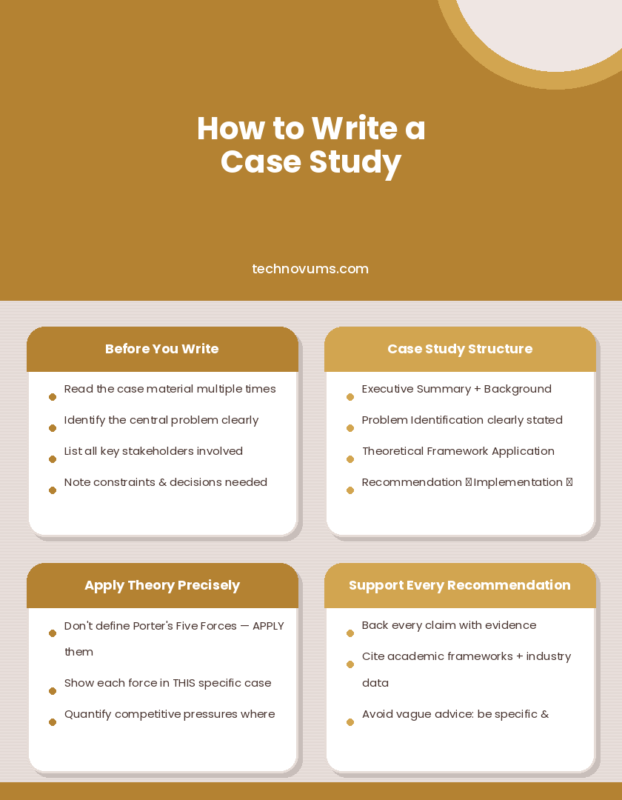
Before typing a single word, read the case material multiple times. Identify the central problem or issue. Who are the key stakeholders? What decisions need to be made? What constraints exist? Annotate the case material and create a summary of the most important facts. Students who rush this stage often write case studies that answer the wrong question.
Structure Your Case Study Effectively
A well-structured university case study typically follows this format: Executive Summary, Background/Context, Problem Identification, Theoretical Framework Application, Analysis of Alternatives, Recommended Solution with Justification, Implementation Plan, and Conclusion. Not all programmes require every section — check your brief carefully and follow the word count allocation for each section.
Apply Theory with Precision
The most common way students lose marks in case studies is by describing theory rather than applying it. Do not just define Porter’s Five Forces — show exactly how each force operates in the specific case you are analysing. Name the specific competitive pressures, quantify them where possible, and explain their strategic implications for the company in question.
Support Every Recommendation with Evidence
Your final recommendation must be justified with evidence from the case, academic literature, and/or industry data. Avoid vague recommendations (“the company should improve its marketing”). Instead, propose specific, actionable strategies supported by cited academic frameworks and real-world comparators.