


How to Write a First-Class Dissertation: A Step-by-Step Guide for Students

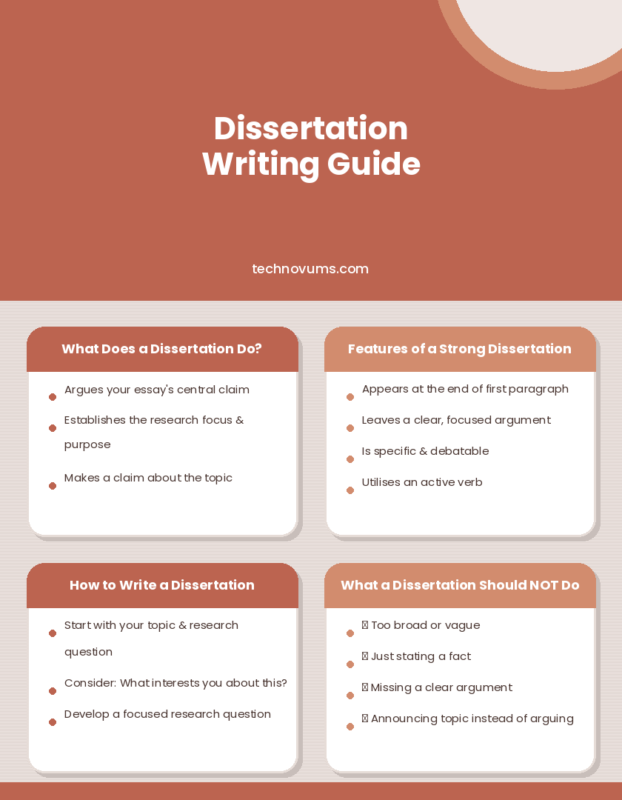
Writing a dissertation is one of the most challenging milestones in any student’s academic journey. Whether you are an undergraduate, master’s, or doctoral student, your dissertation determines a significant portion of your final grade. This guide walks you through every stage — from choosing a topic to submitting a polished final document — and shows you how professional support can make all the difference.
Step 1: Choose a Focused, Researchable Topic
Your topic must be specific enough to research thoroughly but broad enough to find sufficient academic literature. Avoid overly general titles. Instead of “Social Media and Mental Health,” try “The Effect of Instagram Use on Self-Esteem Among University Students in the USA.” A focused topic earns better marks and is easier to manage within your word count.
Step 2: Conduct a Thorough Literature Review
A strong literature review demonstrates your command of existing research. Use academic databases like Google Scholar, JSTOR, and PubMed. Critically evaluate sources — do not simply summarise them. Identify gaps in the existing literature that your dissertation will address. This is where many students struggle, and where professional research support proves invaluable.
Step 3: Develop a Clear Methodology
Your methodology chapter explains how you collected and analysed data. Whether you use qualitative interviews, quantitative surveys, or a mixed-methods approach, justify every choice. Reference established methodological frameworks and explain your sampling strategy, data collection instruments, and analytical approach.
Step 4: Write, Revise, and Proofread Rigorously
First drafts are never final drafts. Write each chapter independently, then revise for coherence and flow. Check your argument progression from introduction to conclusion. Before submission, a professional proofreading service can catch grammatical errors, citation inconsistencies, and structural weaknesses that self-editing often misses.
Quick Checklist Before Submission
Bibliography includes only cited sources
Title page, abstract, and table of contents are complete
All citations follow the required referencing style (APA, Harvard, MLA)
Word count is within the permitted range
Plagiarism check completed with a reputable tool
Chapters flow logically from introduction to conclusion